The Old & New Global Order: Rethinking Leadership and Governance in a Changing Multipolar World
By- Institute of Directors | Authored by - Eugene Mayne

By- Institute of Directors | Authored by - Eugene Mayne
We are here to reflect on the changing global order and what it means for the roles, responsibilities and expectations of corporate boards. The question before us is not whether we can predict or prevent transformation. It is whether we can build organisations that are capable of responding to change with clarity, resilience and purpose.
Let me begin with an analogy.
For much of the recent past, the global order resembled a boardroom in which one dominant power occupied the head of the table. The rules were largely understood, the lines of influence were relatively clear, and the direction of travel was easier to anticipate.
In a fragmented world, influence cannot be sustained through coercion alone. Enduring strength comes from Credibility, Consistency, Competence and Trust.
Today, that table looks very different. More countries are bringing their own ambitions, priorities, currencies and perspectives to the discussion. Authority is becoming more dispersed, alliances are becoming more fluid, and decision-making is growing increasingly complex.
If the old global order resembled a traditional joint family led by a strict patriarch, whose word was final, the emerging order is perhaps more like a large family WhatsApp group. Everyone is an administrator, nobody is on mute, and everyone seems to be speaking at the same time!
The humour in that comparison should not obscure the seriousness of the reality. We are witnessing a fundamental redistribution of influence, and it is changing the way governments, institutions and businesses must operate.
Against this backdrop, Corporate Governance can no longer be understood simply as a matter of oversight and compliance. It must also provide clarity amid uncertainty, balance competing interests and ensure that organisations remain resilient, responsible and purposeful. For too long, corporate strength has been measured primarily through economic power, market dominance, financial muscle and control over resources. These remain important, but in an increasingly fragmented world, economic power alone may prove insufficient. In some circumstances, it may even become a liability.
This brings us to two important questions:
1. How do we build organisations when the traditional foundations of corporate power are being reshaped?
2. How do we lead when influence is increasingly dispersed, stakeholders are becoming more assertive, and the rules themselves are constantly evolving?
The answer lies in redefining corporate strength.
The most resilient organisations of tomorrow will combine financial stability with trust, agility and legitimacy. They will succeed not merely because of the power they command, but because of the confidence they inspire, the partnerships they nurture and the values they uphold.
And this is precisely where corporate boards must lead.
To understand what this new form of leadership might look like, I draw inspiration from three leaders whose very different experiences offer valuable lessons.
1. Prime Minister Lawrence Wong of Singapore: Leading a small island nation surrounded by considerably larger powers, he represents an important lesson in how a country can exercise influence without relying on conventional hard power alone. Singapore's experience demonstrates that strategic strength does not always require choosing sides. It can come from engaging constructively with different partners, maintaining disciplined decision-making and protecting independent national interests. Governments, investors and businesses place confidence in Singapore because its institutions and governance are widely associated with consistency, credibility and competence, even when the world around it is uncertain.
2. Dr. Ngozi Okonjo-Iweala, Director-General of the World Trade Organisation: At a time when confidence in multilateral institutions is under considerable strain, her leadership highlights the importance of building bridges between the Global North and the Global South. Her experience reminds us that diplomacy is most effective when it is grounded in intellectual rigour, ethical clarity and a commitment to collective progress, rather than narrow advantage.
3. Prime Minister Mark Carney of Canada: Whose experience spans leadership at the Bank of Canada, the Bank of England and, now, the highest levels of Canadian public life. His career illustrates the importance of institutional confidence, economic resilience and sound judgement during periods of profound uncertainty. His leadership journey reinforces a crucial point: economic stability is ultimately about more than markets and money. It is also about national resilience, institutional credibility and human well-being. At defining moments, leaders must find a way to uphold their principles while navigating complex and competing interests.
These three leaders differ in their backgrounds, geographies and mandates. Yet they share a common understanding that in a fragmented world, influence cannot be sustained through coercion alone. Enduring strength comes from Credibility, Consistency, Competence and Trust. That is the true power of Soft Power, and it is a lesson that belongs not only in government but in every boardroom.
Soft power may sound abstract, perhaps even mysterious. But it is neither a public-relations exercise nor a marketing strategy. It cannot be manufactured through slogans or purchased through advertising. At its core, soft power is the ability to influence through trust, attraction and persuasion rather than pressure or coercion. It is the strength that cannot simply be claimed; it must be earned.
For a company, this strength rests on three foundations: Competence, Clarity and Credibility.
• Competence gives stakeholders confidence in an organisation's ability to deliver.
• Clarity helps them understand its purpose, priorities and decisions.
• Credibility ensures that its actions remain consistent with its stated values.
Together, these qualities create a form of corporate power that may be quieter than financial or political influence, but is often far more enduring. When global rules fragment and international trade arrangements come under strain, soft power helps an organisation remain steady. When markets become volatile, it helps preserve relationships. Ultimately, in an uncertain world, one of the strongest safeguards a company can possess is the trust it has built over time.
We cannot assume that the global map of capital, technology and strategic advantage will remain as it is. Nor can we afford to spend decades taking critical dependencies for granted.
For decades, corporate boards operated on a number of comforting assumptions. International trade rules would remain broadly predictable. Markets would continue to function with relative openness. Globalisation would deepen, and geopolitical considerations would remain largely in the background of commercial strategy.
Geopolitics might appear on a presentation slide, perhaps towards the end of a strategy deck. That era is over.
Today, geopolitical developments directly influence supply chains, talent, capital, technology and data. Technology itself has become an instrument of strategic influence, while economic interdependence is increasingly being reconsidered through the lens of national security and resilience.
For boards, this requires a fundamental shift in mindset. Geopolitics must move from the final slide of a strategy presentation to the centre of strategic decision-making. The global order is changing dramatically, and history offers us a useful reminder that such shifts are not new.
Consider the story of alum, a mineral compound historically important to the textile industry. For centuries, alum was essential to the dyeing and processing of fabrics. European producers depended heavily on supplies from the East, leaving an important part of their industrial activity vulnerable to external sources. That dependence began to change when significant alum deposits were identified at Tolfa, in Italy, during the fifteenth century. The discovery helped Europe develop a domestic source of a strategically important material.
The wider lesson is striking. A discovery in one place can alter established patterns of trade, reshape economic relationships and change the balance of power for generations. The story is a reminder that the foundations of economic influence are never permanently fixed. Resources, technologies and capabilities that appear indispensable today may be transformed by developments elsewhere tomorrow.
The lesson for modern businesses is clear. We cannot assume that the global map of capital, technology and strategic advantage will remain as it is. Nor can we afford to spend decades taking critical dependencies for granted. We must understand where our vulnerabilities lie, invest in our own capabilities and build the capacity to respond when circumstances change.
Strategic self-reliance, however, should not be confused with isolation. It is about developing the strength to participate in the global economy from a position of greater resilience and confidence. It is also worth remembering that the story of alum did not end with its historic importance to textiles. Its industrial applications have evolved, and it continues to serve essential purposes in modern society, including water treatment.
There is a broader lesson here for organisations. Long-term relevance depends not on clinging to a single source of advantage, but on the ability to adapt, innovate and continue creating value as the world changes. This brings us to the kind of corporate leadership that the emerging global order demands. The transition must begin with a shift from a purely transactional mindset towards a relational, value-driven model of business.
In a world shaped by multipolarity and decentralisation, compliance remains essential, but it is not enough. A board that focuses exclusively on next quarter's performance or the immediate returns from a technology investment risks overlooking the deeper changes unfolding around it. Effective governance requires us to look beyond the next reporting cycle and ask more fundamental questions. Are we building capabilities that will remain relevant? Are we strengthening the confidence of our stakeholders? Are we preparing our organisations not merely to withstand disruption, but to contribute meaningfully to the future?
And we must not overlook the capabilities being developed closer to home.
There was a time when Western consultants would travel to Mumbai and Bengaluru to advise Indian businesses on how to organise, innovate and compete. Today, global leaders increasingly look to India to understand how digital infrastructure can be developed at scale and made accessible to millions of people. Through the Unified Payments Interface, or UPI, transactions that once required considerable time and infrastructure can now be completed within seconds.
The lesson extends well beyond payments. India has shown that solutions developed to address the needs of a large and diverse population can offer valuable insights to the wider world.
At a time when uncertainty, rivalry and disruption dominate much of the global conversation, there is one more quality that deserves our attention: Hope.
I am referring to hope as a deliberate institutional commitment to building a better and more secure shared future. Organisations embody hope when their workplaces become environments in which people from different backgrounds and with different beliefs can work together in safety, with dignity and a shared sense of purpose. They institutionalise hope when they protect resources for long-term innovation, even when immediate returns are uncertain. They cultivate hope when they collaborate, including with traditional competitors, to address challenges that no single organisation can resolve alone. And they demonstrate hope when their decisions reflect a conviction that human progress matters more than the pursuit of corporate advantage in isolation.
Hope, in this sense, is not separate from corporate governance. It becomes meaningful when it is translated into decisions, budgets, policies and everyday behaviour.
Years from now, when historians look back on this period of global transformation, they will record how organisations responded to uncertainty. Some will be remembered for having merely endured the disruption.
Others may be remembered for having exploited it for short-term advantage.
But there is a third possibility.
The organisations that deserve our attention are those that use periods of upheaval to strengthen trust, rethink established assumptions, invest in lasting capabilities and create value that extends beyond their immediate interests. These are the organisations that will demonstrate what responsible leadership can achieve when the world around them is changing.
In a many-centred world, the strongest organisations will not necessarily be those that command the greatest resources or exert the most influence. They will be those that earn confidence, remain adaptable and uphold their values when doing so is most difficult.
That is how governance becomes more than oversight. It becomes a force for resilience, responsible progress and shared prosperity.
And that is how, even when the global order is in flux, we can help create a future defined not merely by survival, but by trust, stability and hope.
Thank you very much.
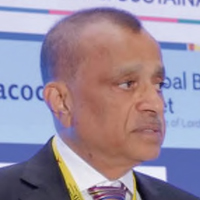
He is the Founder & Group CEO, Tristar Group, UAE during the Inaugural Session of the National Convention Series on 'Boards', held on September 05, 2026 at Taj Lands End, Mumbai, India.
Owned by: Institute of Directors, India
Disclaimer: The opinions expressed in the articles/ stories are the personal opinions of the author. IOD/ Editor is not responsible for the accuracy, completeness, suitability, or validity of any information in those articles. The information, facts or opinions expressed in the articles/ speeches do not reflect the views of IOD/ Editor and IOD/ Editor does not assume any responsibility or liability for the same.

Nov 10, 2026
In a multipolar world as middle ranking powers search for new relationships to augment their capabilities, big powers seem more willing to exert hard power and disrupt to demonstrate and exploit their ranking. The USA is led by a climate change denier who initiated a war of choice that has backfired.
Read more
Nov 10, 2026
It was well past 6.00 pm, much beyond the scheduled closing time of the Board meeting. The Directors were beginning to glance at their watches, nervous about catching their return flights to their home cities. The Chairman looked through the agenda and announced, “We have completed the key items.
Read more
Nov 10, 2026
For as long as boards have existed, they have operated at a structural disadvantage. Directors answer for a company they do not run, and most of what they learn reaches them through a single channel: the management team they are meant to oversee.
Read more
Nov 10, 2026
The days have gone when Corporate Governance in Public Sector Undertakings (PSUs) was considered merely as a regulatory obligation. The era of limited autonomy for boards for decision-making, more inclined towards social obligations rather than a commercial approach and government control has gone with the passage of time.
Read more
Nov 10, 2026
For decades, Corporate Leadership could borrow its bearings from a small circle of capitals and a shared set of assumptions. Today those bearings are scattered across a many-centred world, and boards must steer by judgement more than by precedent. It is a harder way to lead, but also a more honest one.
Read more
Oct 15, 2026
Independent Directors (IDs) should complement executive colleagues who wrestle with day-to-day issues that burn up time needed for the independent thought expected of company directors. IDs and executive directors should understand each other's roles and how their respective contributions can be complementary.
Read more
Oct 15, 2026
Boards rarely destroy value because a director did not know a section of tax law. They destroy value when obvious questions are not asked early enough, or answers are accepted because the organisation has fallen in love with a transaction. This is not confined to weak boards; it is the natural risk of enthusiastic ones.
Read more
Oct 15, 2026
The role of an Independent Director has never been more vital than in today's increasingly complex corporate landscape. Currently, businesses are navigating geopolitical uncertainty, rapid technological disruption, diverse regulatory expectations, mounting stakeholder demands, financial pressures and growing scrutiny of corporate governance.
Read more
Oct 15, 2026
Public service brings in a lot of experience across different sectors, and in some sectors one does develop deeper insights. Thus, when one joins the boardroom, one can bring in that experience, but it is equally important to keep oneself updated in the sector in which one has accepted the board position.
Read more
Oct 15, 2026
My answer has changed over the years. Earlier, I would have said that deep functional expertise especially in functions like Finance, HR and Business Operations, leadership experience and a good reputation were the foundation. I still believe they are essential
Read more
Oct 31, 2025
Aug 08, 2025

Aug 08, 2025
Aug 08, 2025

Aug 08, 2025

Aug 08, 2025
Aug 08, 2025
Jul 18, 2025

Feb 06, 2025

Nov 09, 2024
Jun 01, 2024

Mar 05, 2024