Governance Begins with Conscience: Why Ethical Decisions Today Determine Institutional Reputation Tomorrow

Today, we are living in a period of extraordinary change. We have artificial intelligence, geopolitical uncertainty, climate risk and rapidly changing stakeholder expectations. The responsibility of corporate boards is growing and will continue to grow.
In this new global order, a board cannot remain a body that only reviews financial results and regulatory compliance. It must provide foresight, build resilience and protect the long-term interests of every stakeholder. Stakeholders include everyone, including society.
Governance cannot simply mean ticking the boxes of regulation. It must begin with conscience. Laws will tell us what we are permitted to do. Values will tell us what we ought to do.
A truly effective board must ask three questions.

1. Is it legally correct?
2. Is it ethically correct?
3. Will it strengthen the organisation's reputation and stakeholders' trust in the long term, rather than merely generate short-term profit?
The board must always set the moral tone for the organisation. Culture does not begin with the rulebook; it begins in the boardroom. Transparency is no longer optional. In today's digital world, information travels instantly, and any gap between what an organisation says and what it eventually does will become visible. Transparency does not necessarily mean disclosing everything. It means communicating what is material honestly, clearly and at the right time.
In more than four decades of building enterprises, I have learnt that integrity is not merely a moral virtue; it is a valuable business asset.
Good governance requires management to provide the board with a complete picture, including uncomfortable facts. A board that hears only good news is a board that is being kept in the dark. We cannot permit this.
Independent directors must therefore have the courage to ask difficult questions. Their responsibility is not to oppose management, but to strengthen decision-making through constructive challenge.
In more than four decades of building enterprises, I have learnt that integrity is not merely a moral virtue; it is a valuable business asset.
Capital follows credibility. Talent follows trustworthy leadership. Customers remain loyal to organisations that consistently keep their promises. Reputation may take decades to build, but it can be destroyed by a single unethical decision.
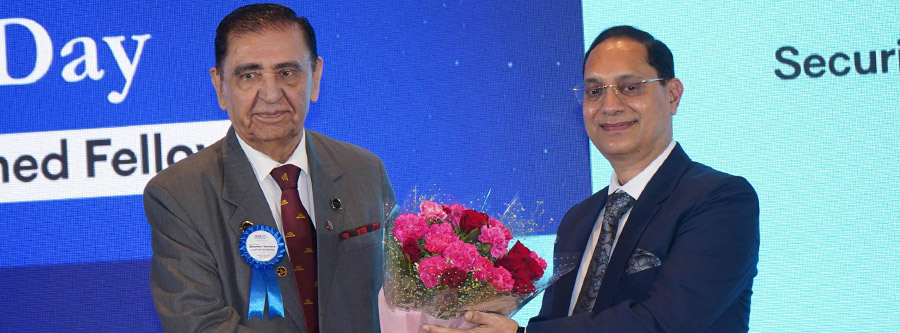
He is the Founder & Managing Director, Hiranandani Group during the National Convention Series on 'Boards', held on September 05, 2026 at Taj Lands End, Mumbai, India.
Owned by: Institute of Directors, India
Disclaimer: The opinions expressed in the articles/ stories are the personal opinions of the author. IOD/ Editor is not responsible for the accuracy, completeness, suitability, or validity of any information in those articles. The information, facts or opinions expressed in the articles/ speeches do not reflect the views of IOD/ Editor and IOD/ Editor does not assume any responsibility or liability for the same.

Nov 10, 2026
In a multipolar world as middle ranking powers search for new relationships to augment their capabilities, big powers seem more willing to exert hard power and disrupt to demonstrate and exploit their ranking. The USA is led by a climate change denier who initiated a war of choice that has backfired.
Read more
Nov 10, 2026
It was well past 6.00 pm, much beyond the scheduled closing time of the Board meeting. The Directors were beginning to glance at their watches, nervous about catching their return flights to their home cities. The Chairman looked through the agenda and announced, “We have completed the key items.
Read more
Nov 10, 2026
For as long as boards have existed, they have operated at a structural disadvantage. Directors answer for a company they do not run, and most of what they learn reaches them through a single channel: the management team they are meant to oversee.
Read more
Nov 10, 2026
The days have gone when Corporate Governance in Public Sector Undertakings (PSUs) was considered merely as a regulatory obligation. The era of limited autonomy for boards for decision-making, more inclined towards social obligations rather than a commercial approach and government control has gone with the passage of time.
Read more
Nov 10, 2026
For decades, Corporate Leadership could borrow its bearings from a small circle of capitals and a shared set of assumptions. Today those bearings are scattered across a many-centred world, and boards must steer by judgement more than by precedent. It is a harder way to lead, but also a more honest one.
Read more
Oct 15, 2026
Independent Directors (IDs) should complement executive colleagues who wrestle with day-to-day issues that burn up time needed for the independent thought expected of company directors. IDs and executive directors should understand each other's roles and how their respective contributions can be complementary.
Read more
Oct 15, 2026
Boards rarely destroy value because a director did not know a section of tax law. They destroy value when obvious questions are not asked early enough, or answers are accepted because the organisation has fallen in love with a transaction. This is not confined to weak boards; it is the natural risk of enthusiastic ones.
Read more
Oct 15, 2026
The role of an Independent Director has never been more vital than in today's increasingly complex corporate landscape. Currently, businesses are navigating geopolitical uncertainty, rapid technological disruption, diverse regulatory expectations, mounting stakeholder demands, financial pressures and growing scrutiny of corporate governance.
Read more
Oct 15, 2026
Public service brings in a lot of experience across different sectors, and in some sectors one does develop deeper insights. Thus, when one joins the boardroom, one can bring in that experience, but it is equally important to keep oneself updated in the sector in which one has accepted the board position.
Read more
Oct 15, 2026
My answer has changed over the years. Earlier, I would have said that deep functional expertise especially in functions like Finance, HR and Business Operations, leadership experience and a good reputation were the foundation. I still believe they are essential
Read more
Oct 31, 2025
Aug 08, 2025

Aug 08, 2025

Aug 08, 2025

Aug 08, 2025

Aug 08, 2025
Aug 08, 2025
Jul 18, 2025

Feb 06, 2025

Nov 09, 2024

Jun 01, 2024

Mar 05, 2024